Georgijs Osokins
“
«Georgijs Osokins is not only a brilliant pianist, but as well a highly gifted musician, with whom it is a sheer joy to share scores of different authors and styles.» - Gidon Kremer
”
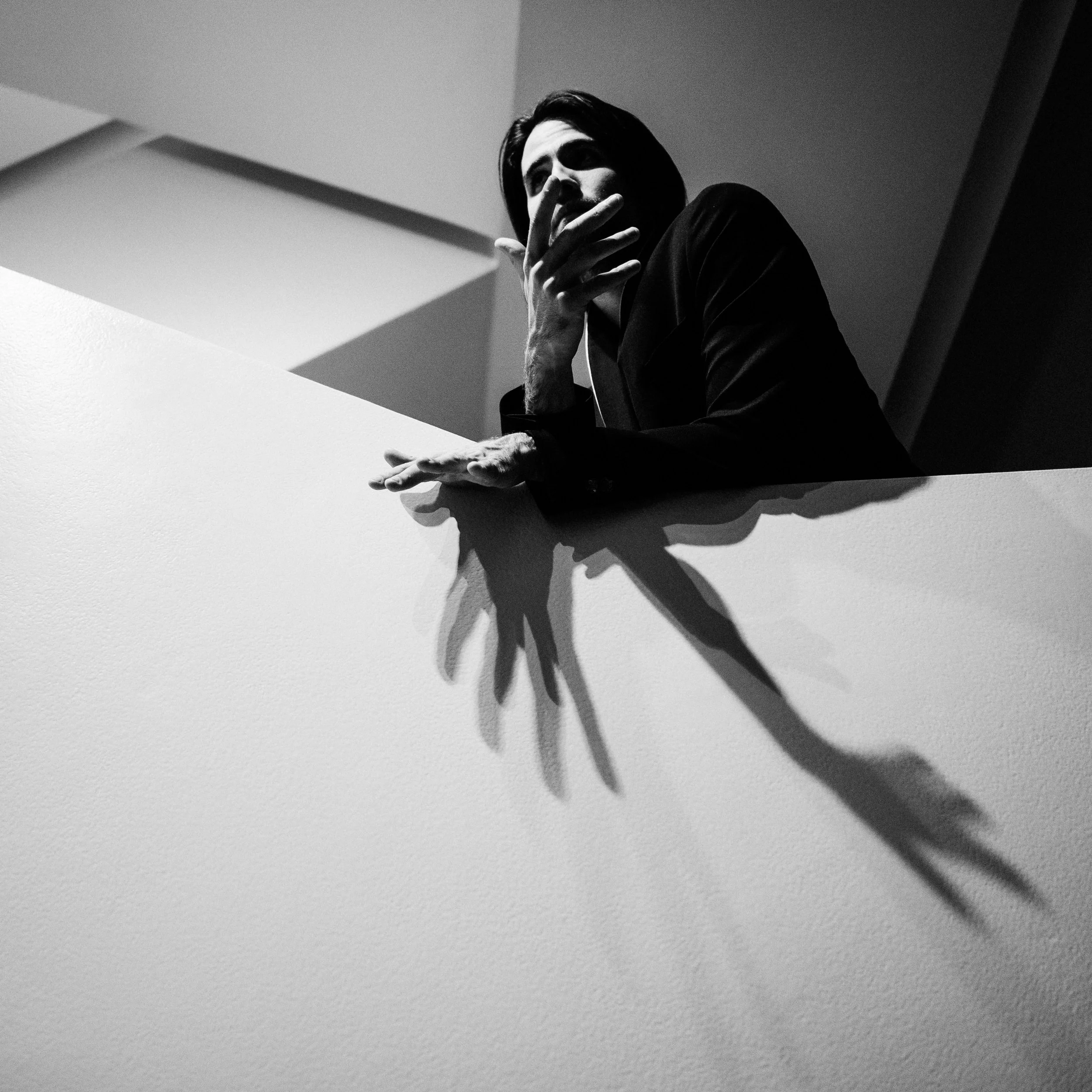
Image © Marco Borggreve

“
«Georgijs Osokins is not only a brilliant pianist, but as well a highly gifted musician, with whom it is a sheer joy to share scores of different authors and styles.» - Gidon Kremer
”
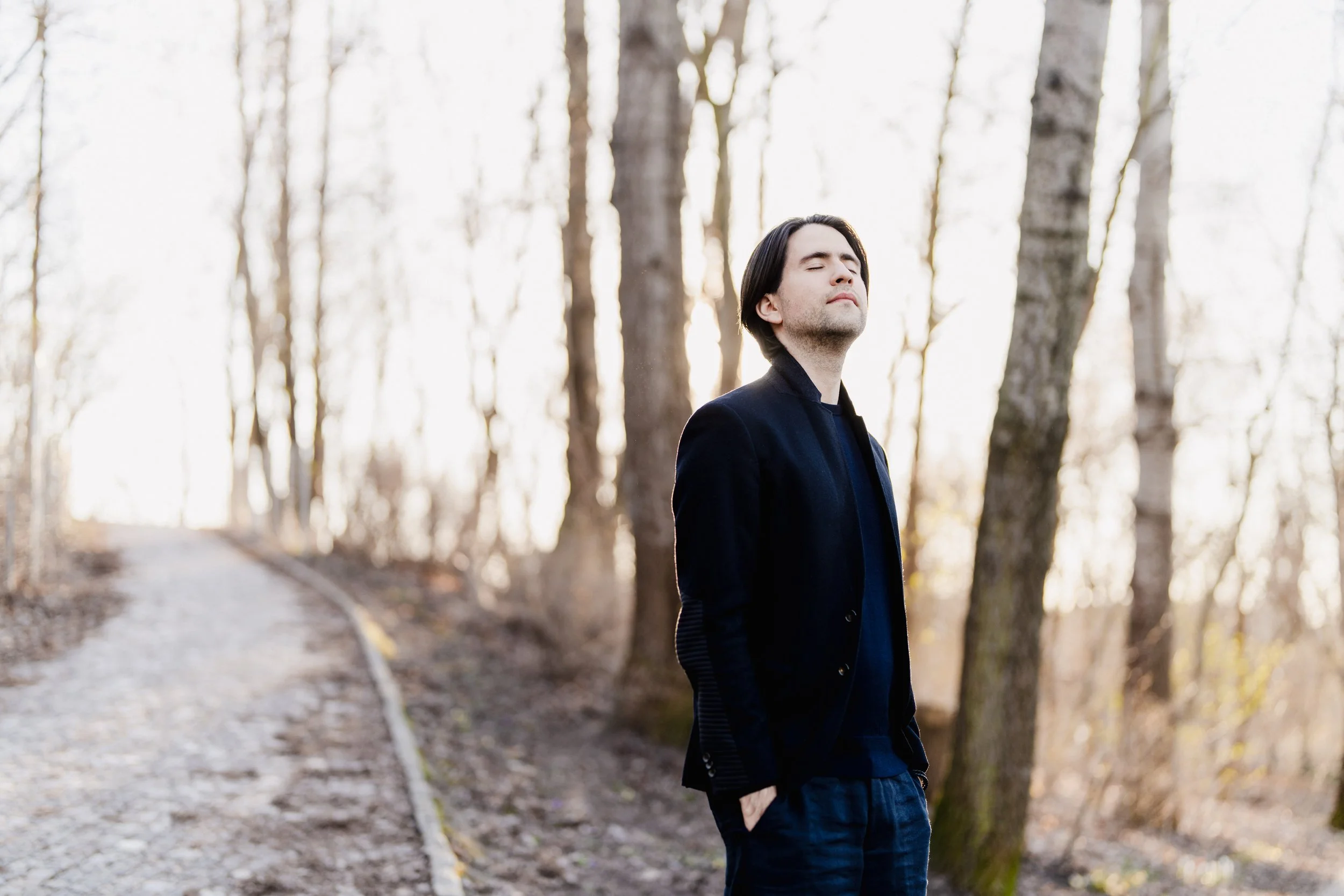
Image © Marco Borggreve

Georgijs Osokins
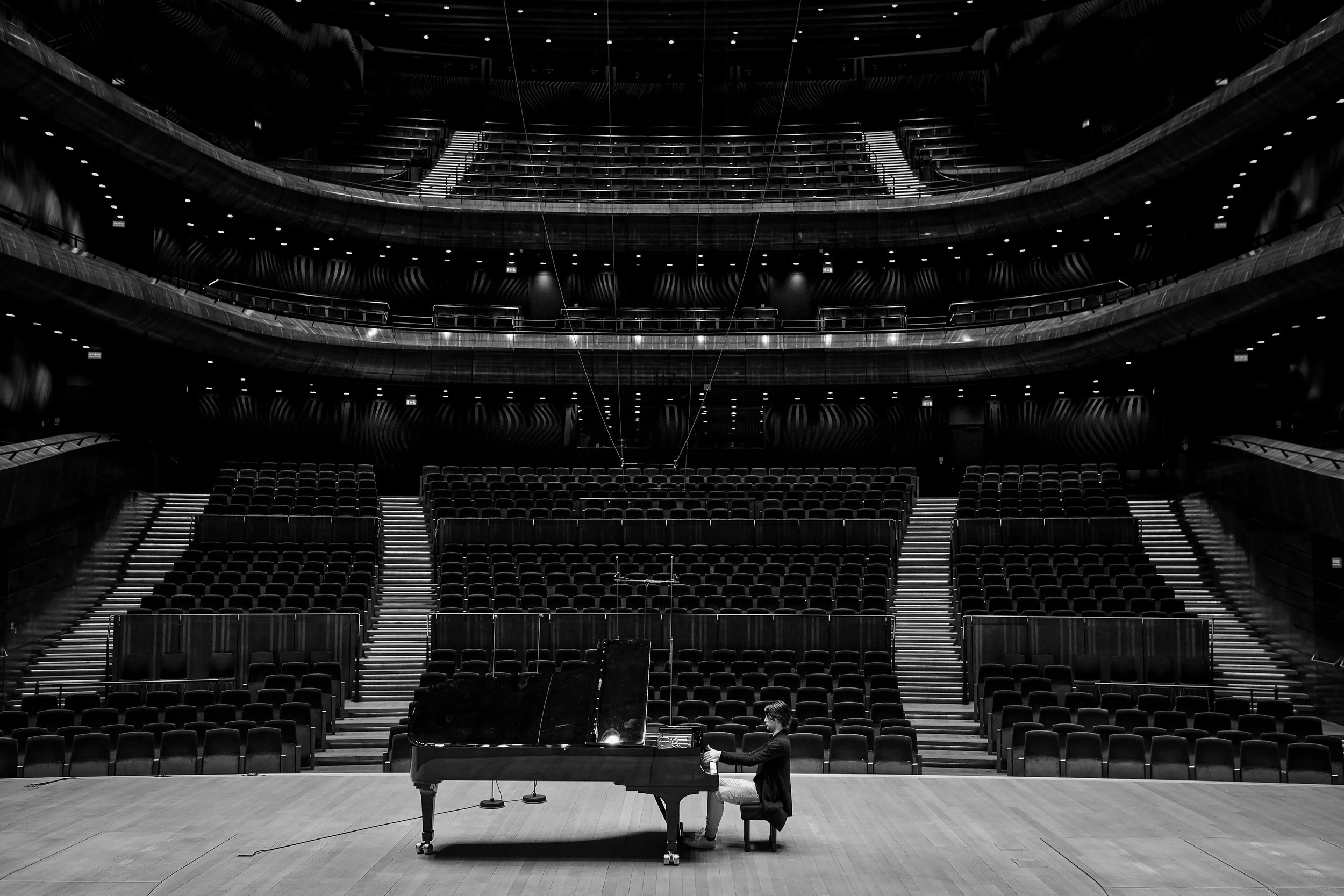
© Marco Borggreve
In 2025, Georgijs Osokins became the first Baltic pianist to sign an exclusive multi-album agreement with Deutsche Grammophon. His debut DGG recording, For Arvo, released on Arvo Pärt's 90th birthday, comprises the composer's complete piano works and quickly captured international attention, not least for Osokins' own solo piano transcriptions, among them the iconic Fratres, for which Pärt granted him exclusive authorisation to perform and record. Described by German critic Kai Luehrs-Kaiser (radio3, RBB) as performed “with consummate composure and simplicity”, the album uniquely also includes Hymn to a Great City for two pianos, performed together with Martha Argerich — the first time Argerich has ever recorded a work by Pärt. For Arvo was named among Apple Music’s Top 10 and Mezzo TV’s Top 5 albums of the month. In November 2026, DGG will release his second album.
An anti-mainstream Chopinist, a poet in the freedom of his phrasing, Osokins illuminates the familiar with wholly personal insight, a quality that inspired Garrick Ohlsson to write: “You recreated the kind of moments I was lucky enough to hear with Horowitz at his best, a link to an earlier time — Rachmaninov, Hofmann, Friedman — artists whom my generation never heard.”
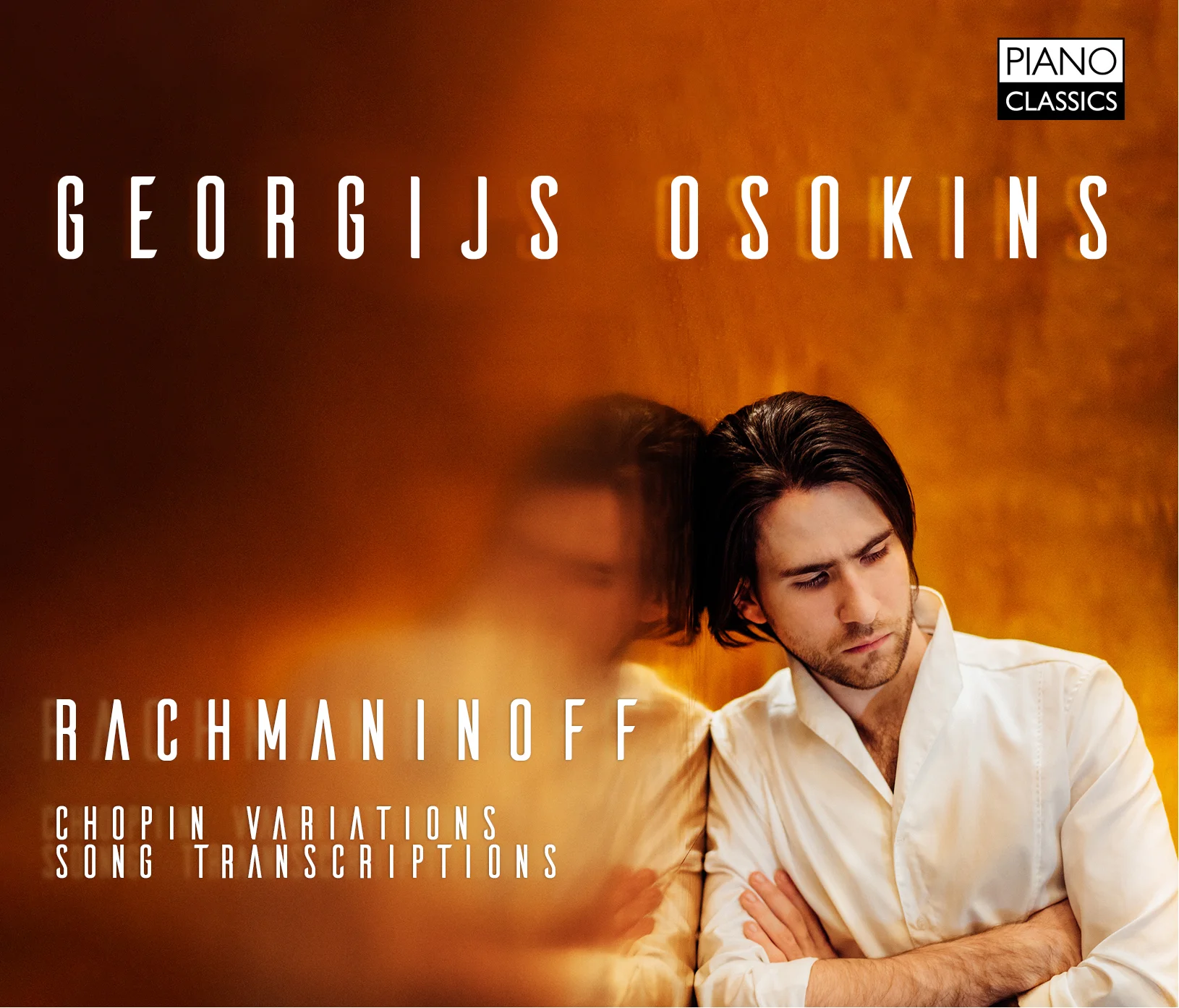
His Rachmaninoff album, featuring the Variations on a Theme of Chopin and song transcriptions, led Rémy Franck to write in Pizzicato: “Osokins differs strongly from the best interpreters, whether it's Ashkenazy or Trifonov. He is more emotional, penetrates deeper into the world of Rachmaninoff and displays a particularly fine feeling for the typical Russian melancholy without ever sweetening the music.”
Press reviews of Osokins' live performances have been equally fervent, praising his “impeccable technique” (France Musique), “subtlety of touch” (The Strad) and “agility and grace” (Gramophone), culminating in the words of French critic André Peyregne, who captured his performance of Chopin's Second Concerto with the Orchestre Philharmonique de Monte-Carlo under Mirga Gražinytė-Tyla with rare eloquence: “You are about to hear Chopin's Second Concerto for the hundredth time and suddenly, a pianist appears who tells you a new story, who intersperses his discourse with original touches, unprecedented accents, reveals original phrasing, and employs his own unique articulations, and in doing so, exalts the profound meaning of the work. All of this goes straight to your heart.”
Highlights of 2026 and 2027 include, among others, Chopin's Piano Concerto No. 2 with the Orchestre de la Suisse Romande under Mirga Gražinytė-Tyla in Geneva, Lausanne and KKL Lucerne; a four-hand performance with Martha Argerich of works by Ravel and Schubert's Fantasie at the Isola Musicale d'Europa on the island of Elba in Italy; a tour of Japan including his debut at Suntory Hall in Tokyo; his recital debuts at the Gewandhaus Leipzig and at the Konzerthaus Dortmund; concerts with the Orquestra Sinfónica Portuguesa and recitals at the Beethoven Easter Festival in Warsaw, the Beethoven-Haus Bonn, the Heidelberger Frühling Musikfestival, the Musée des beaux-arts in Montréal and a return to the Klavier-Festival Ruhr.
Osokins first gained international attention at the age of 19 during the XVII International Chopin Piano Competition, where he quickly became an absolute audience favourite. His interpretations were hailed by critics as “revolutionary” and “exceptional and unpredictable”. Shortly afterwards, Osokins made important debuts at the Elbphilharmonie in Hamburg, Konzerthaus Berlin, Klavier-Festival Ruhr, Laeiszhalle in Hamburg, the Gstaad Menuhin Music Festival, the Lockenhaus Festival, the Schleswig-Holstein Musik Festival, the International Piano Series in Bern, NOSPR Concert Hall in Katowice, NFM Hall in Wrocław, the Vancouver Playhouse, Tokyo Metropolitan Theatre and Tongyeong Hall in South Korea. In the season 2021/22 Georgijs Osokins debuted at the 101st Salzburg Festival, Wigmore Hall in London, Pierre Boulez Saal in Berlin and Sala Verdi in Milan. 2023 saw his debuts at Salle Gaveau in Paris, at the Shanghai Music Festival and at Carnegie Hall's Stern Auditorium in New York alongside Gidon Kremer. Together with Lucas Debargue, Georgijs was named the first permanent Guest Artist of Kremerata Baltica in its 25-year history.
With Kremerata Baltica, he performed a number of concerts in Italy, including at the Teatro La Fenice in Venice, as well as in Lisbon, and undertook a tour across Asia, appearing in major concert halls in South Korea, China and Taiwan. Osokins frequently collaborates with Gidon Kremer, both in duo and trio, touring across the United Kingdom, Ireland, France, Germany, Italy, China, Japan and the USA, including Carnegie Hall. His other chamber music partners include Camille Thomas, Mario Brunello, Geneva Lewis, Giedrė Dirvanauskaitė, Nicolas Altstaedt and Timothy Ridout.
Osokins has appeared with orchestras including the Orchestre Philharmonique de Monte-Carlo, the Orchestre de la Suisse Romande, the Israel Philharmonic Orchestra, Kremerata Baltica, the Warsaw Philharmonic, the NFM Wrocław Philharmonic, the Orquestra Sinfónica Portuguesa, the Danish Chamber Orchestra, the Latvian National Symphony Orchestra and the Tokyo Metropolitan Symphony Orchestra, under conductors such as Mirga Gražinytė-Tyla, Christoph Eschenbach, Rotem Nir, Vladimir Fedoseyev, Andrey Boreyko, Adam Fischer, Tianyi Lu, Lio Kuokman, Andris Poga and Kristiina Poska.
In previous years, Piano Classics released two brilliantly reviewed albums focused on Chopin's Late Works and works by Rachmaninoff, and Accentus released Georgijs' first chamber music album alongside Gidon Kremer and Giedrė Dirvanauskaitė, with Chopin's Piano Trio and Beethoven's Triple Concerto, nominated for the International Classical Music Awards 2020 and Opus Klassik 2021.
Georgijs Osokins received the Silver Cross of Merit awarded by the President of the Republic of Poland and, in 2016, the Latvian Grand Music Award — his country's highest state award in music — previously awarded to Mstislav Rostropovich, Mariss Jansons, Gidon Kremer, Andris Nelsons, Elīna Garanča and Pēteris Vasks.
Latvian-born in 1995 and Berlin-based, Osokins comes from a family of pianists from Riga. He took his earliest lessons from his father, Sergejs Osokins, and went on to study with Dmitri Bashkirov, with Sergei Babayan at the Juilliard School in New York, and with Georg Friedrich Schenck at the Robert Schumann Hochschule in Düsseldorf.
Osokins performs on a piano bench custom-made for him by Fazioli.
«I regard this young pianist as someone close to me - highly gifted musician. He has big future.» - Gidon Kremer.
«He has a very rare gift of a true Chopinist.» - Sergei Babayan.
«Osokins is a protégé of Gidon Kremer and one understands why. Refined, impeccable technique, musical ideas - simply great piano playing.» - France Musique
“Having caused something of a sensation at the 2015 Warsaw Chopin Competition, he certainly has the requisite mix of agility and grace..» - Harriet Smith, Gramophone
«This young musician is exceptionally talented.» - Dmitri Bashkirov, renowned pedagogue.
«Georgijs Osokins could be take up by now of the major recording companies such as Deutsche Grammophon who would welcome it.» - France Musique.
«Georgijs Osokins arguably delivered up the day’s most strikingly individual interpretations. He won me over with his concentration and control of minute details, such as the long chains of carefully calibrated trills. Indeed, his epic sense of time scale is akin to Emil Gilels.» - Gramophone Magazine during Chopin Competition.
«Osokins differs strongly from the best interprets, whenever it’s Ashkenazy or Trifonov. He is more emotional, penetrates deeper into the world of Rachmaninoff and displays a particularly fine feeling for the typical Russian melancholy without ever sweetening the music» - Remy Franck, 5-star review on pizzicato.lu, 2019.
«Georgijs Osokins is a remarkable pianist»- “Bravo” Magazine Japan, ebravo.jp
«Kombiniert mit so vielen Aha-Momenten wirkte das 1. Klavierkonzert von Schostakowitsch fast berechenbar brav. Als Solist war der junge lettische Pianist Georgijs Osokins gerade deswegen eine sinnige und stimmige Wahl, denn nachdem der sich auf einen arg niedrigen Klavierhocker gefaltet hatte, fand er eine gut funktionierende Balance zwischen den virtuosen Abschnitten und den Anspielungen auf spätromantische Brillanz und berühmte Vorbilder.» - Hamburger Abendblatt, after Georgijs’ debut at Elbphilharmonie with Sergei Nakariakov, 2019.
«Die herausragende Interpretation des Abends ist das Konzert für Klavier, Trompete und Streichorchester von Dmitri Schostakowitsch. Sergei Nakariakov mischt sich mit seiner Trompete unter die Geiger und überlässt dem 24jährigen Georgijs Osokins die Bühne, der bereits 2015 beim Internationalen Chopin-Wettbewerb in Warschau 19 jährig für Aufsehen sorgte. Osokins Spiel beflügelt, die spürbare Freude an der Musik ist auch der jungen Kremerata Baltica anzusehen.» - klassik-begeistert.de by Elzbieta Rydz, after Georgijs’ debut at Elbphilharmonie with Sergei Nakariakov, 2019.
«Eine eminente Begabung für die Musik Rachmaninows. Es fasst sie durchhörbar, federnd elegant und nie fett oder überpedalisiert, was der dichten Textur eines viel zu selten gehörten Opus’ wie den Chopin-Variationen sehr entgegenkommt. Unter Osokins Händen wirkt die Fülle des Satzes fast schlicht und angemessen.» - Matthias Kornemann, Fono Forum Magazine.
«Die bahnbrechende Erscheinung des Abends war aber Osokins. Seine Chopin-Interpretation ist aufsehenerregend. Kein glattpolierter Klang, sondern Kanten und Rhythmik in den Mazurken. Zwei Chopin-Etüden bringen diese Genialität auf den Punkt: Klangarchitektur exquisit, wie aus dem Moment gemeißelt, die "Revolutionsetüde" in beängstigender Dämonie» - Oberösterreichische Nachrichten, Austria 2020.
«A pianist of this individual stamp (and Daniil Trifonov, Evgeni Bozhanov, Benjamin Grosvenor, Federico Colli and Ivo Pogorelich before them) presents the listener with the a conundrum. He raises all sorts of issues concerning fidelity to the score and the limits of interpretation.» - Michael Moran, Australian music critic.
«Osokins' CD-Debüt erweist sich als eine der persönlichsten, gleichsam eine der schlüssigsten und spannendsten Chopin-Veröffentlichungen der letzten Jahre.» (Feindschaft für Musik - www.jpc.de).
«Georgijs Osokins, avec cette alliance surprenante de bravoure et de gravité, avec cette sonorité si rare qui s’unifie autour du bas medium, phrase Chopin ample, tend son discours, et propose souvent des lectures radicales qui étonnent : écoutez seulement la conduite absolument originale qu’il imprime à la si complexe Polonaise-fantaisie, une longue divagation qui pourtant n’oublie pas la forme qui l’autorise. C’était oser beaucoup pour un premier disque Chopin d’aller uniquement aux ultimes opus. Mais que ce soit dans la Sonate en si, dans la si noire Berceuse, dans les Mazurkas de l’opus 59 dont il fait trois mondes en soi, ou dans cette Barcarolle dés le premier accord captivante, tragique plutôt que rêveuse, il affirme avant même que des moyens somptueux des conceptions altières et pourtant murement réfléchies qu’on n’attend pas d’un pianiste si jeune. Et si un futur Grand traçait là ses premiers sillons ? Ecoutez seulement.” (Discophilia - Artalinna.com). - Jean-Charles Hoffelé.


Georgijs Osokins (Artist), Martha Argerich (Artist), Arvo Pärt (Composer)
Georgijs Osokins (Artist), Arvo Pärt (Composer)
Georgijs Osokins (Artist), Rachmaninoff (Composer)

Georgijs Osokins (Artist), Chopin (Composer)